




Una questione nazionale
Il Mezzogiorno da "problema" a "opportunità"
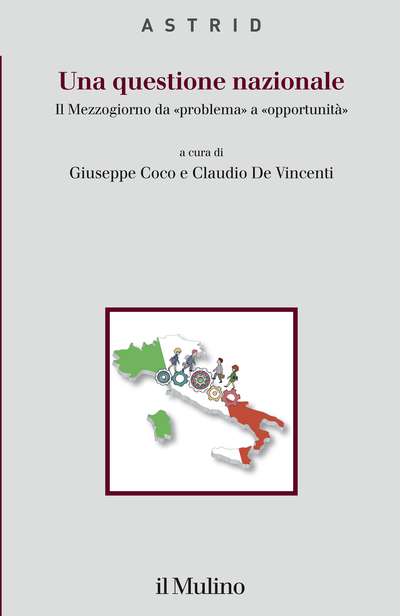
More than 150 years after the Unification of Italy, the Southern Question remains an unresolved and determining issue for the social and institutional stability of the country. Although still lagging behind from an economic and industrial standpoint, the South is far from static and presents important potential, as demonstrated in the 2015-17 period: despite having been hit harder by the consequences of the 2008 crisis than Central and Northern Italy, it was able during those years to connect with the limited recovery of our country across all relevant variables, particularly GDP, employment, investment, and exports. Astrid's study group on this topic has approached the Southern Question from three distinct but strongly interrelated perspectives: the productive fabric and development policies; the gap in services, infrastructure, and living conditions; the maintenance of institutional quality. This has resulted in a volume that is the product of collective and coordinated reflections on the main problems of Southern Italy. The outbreak of the crisis resulting from the health emergency does not change the problems but makes the policies necessary to address them more urgent and unavoidable. The inspiration for this work is "Risorgimento-like," as the authors are convinced that the Southern Question is a national question and that it is the specific responsibility of the State to address it. Only within membership in the national community with its rights and duties can the question of intervention to reduce and ultimately close the gap be posed. The recovery of the post-World War II period occurred in an integrated manner with the process of real unification of the country, with its industrialization and infrastructure development, with the major transport and energy networks, and with the promotion of uniform standards in schools and services. Without indulging in impossible returns to the past, the central thesis is that the time has come to place greater emphasis on the sense of belonging to the national community, which was so clearly manifested during the health emergency.